What is AgentX?+
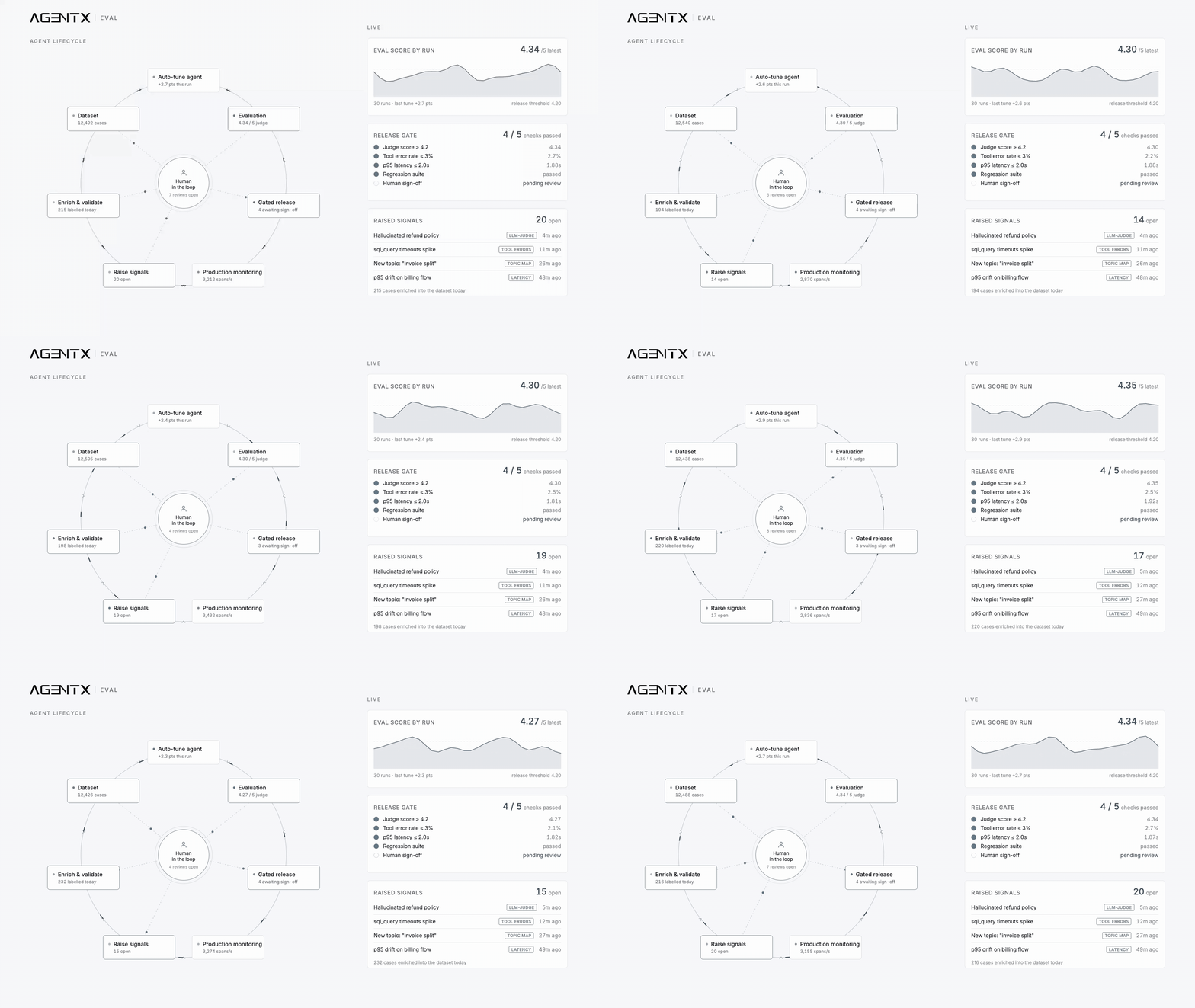
AgentX is the enterprise platform for orchestrating, evaluating, tracing, and observing AI workforces. It manages the full AI agent lifecycle, from orchestration and evaluation to monitoring and auto-improvement, so you can ship AI agents to production with confidence.
What is a multi-agent workforce?+
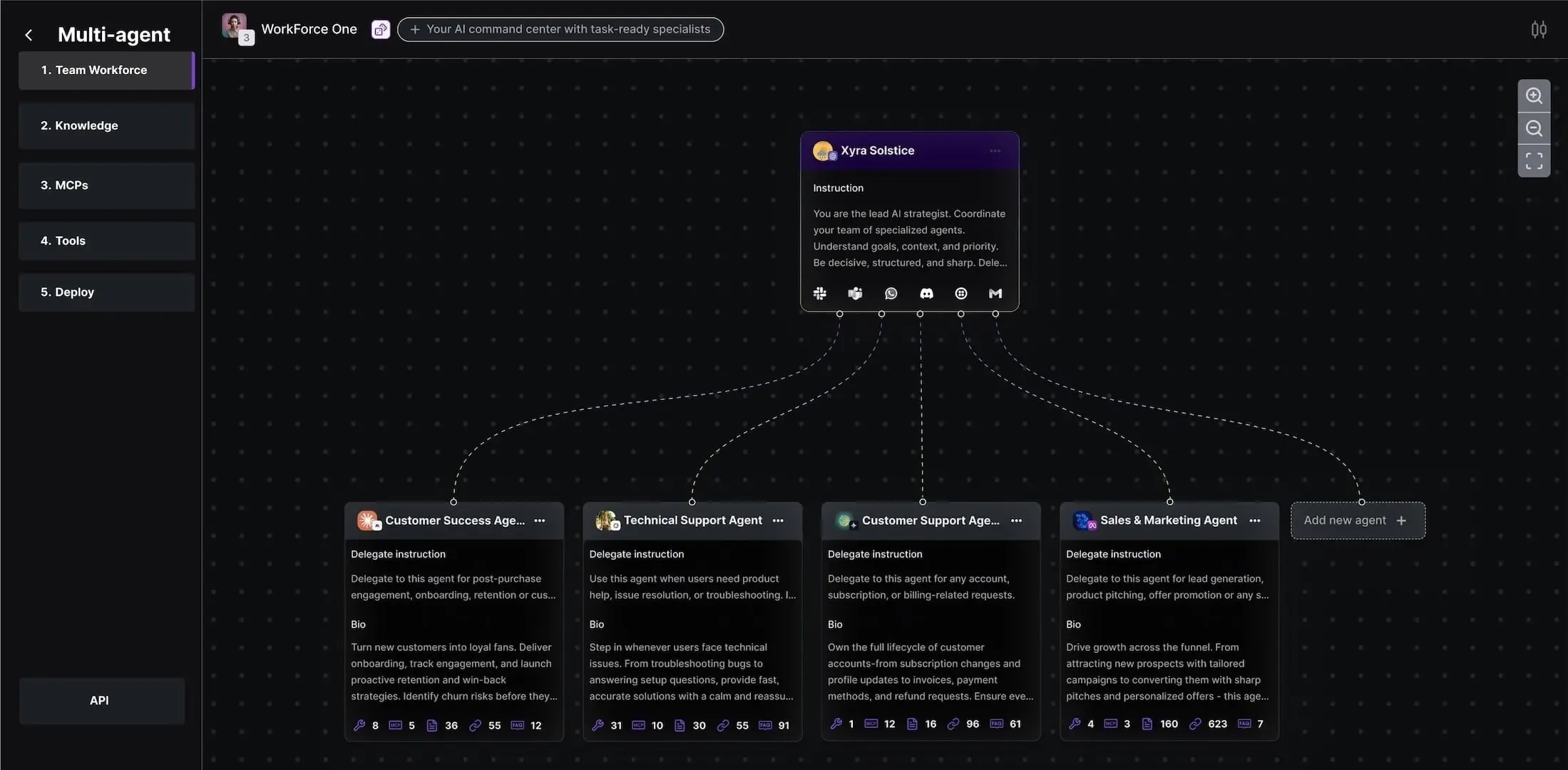
A multi-agent system uses multiple cooperating agents to handle a request instead of a single agent. An orchestrator agent and its members each have a defined role, instructions, model, memory, and tools, and the final answer is produced by the team effort.
Which agent frameworks does AgentX work with?+
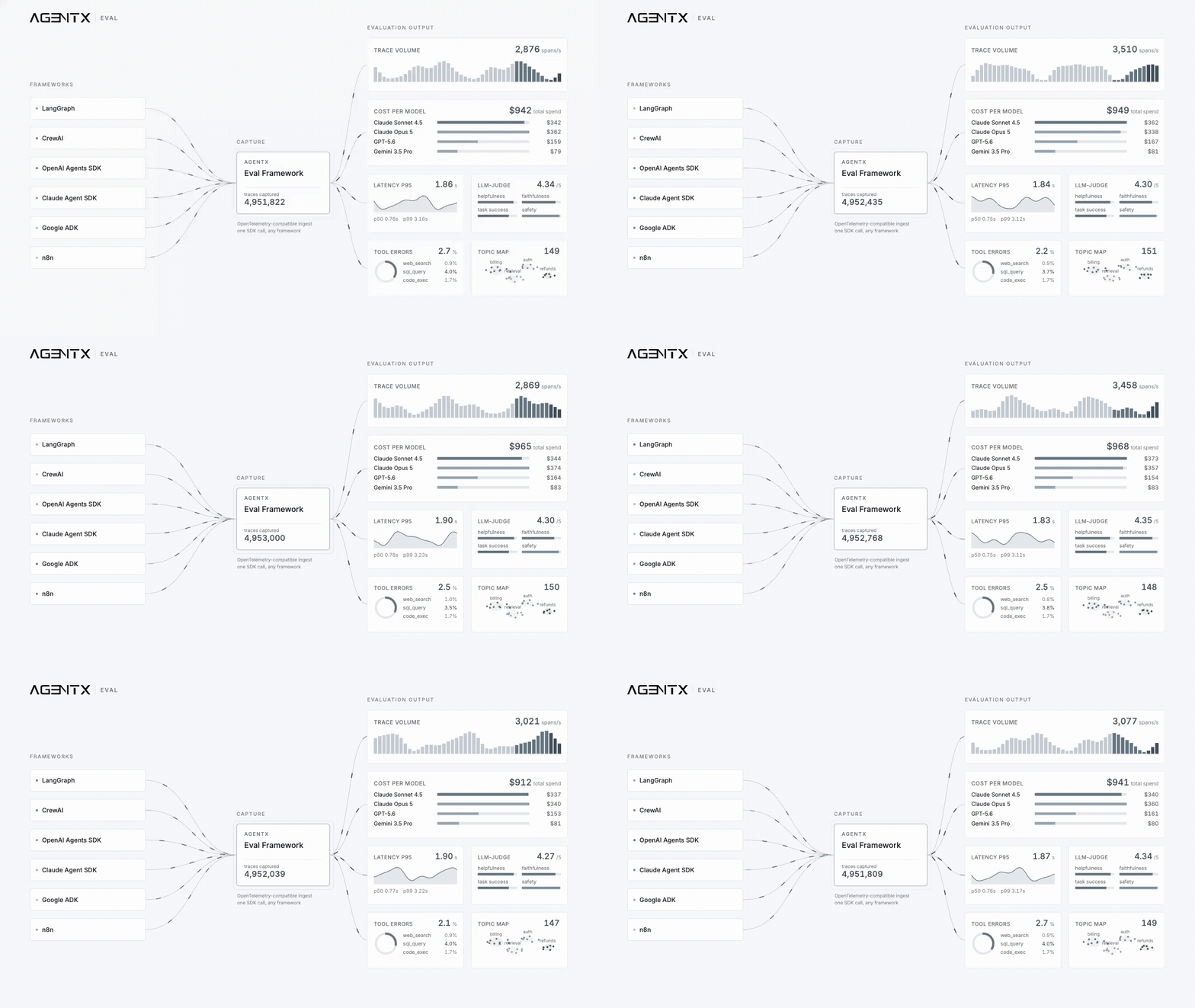
AgentX is compatible with leading agent frameworks, including LangChain, CrewAI, OpenAI Agents SDK, Anthropic, and Google ADK. You can bring your own model or use ours.
How does AgentX evaluate AI agents?+
Run agents against test sets before deploy and track regressions in a CI/CD pipeline. In production, runtime evaluations provide 24/7 behavioral monitoring using LLM-as-judge and real-time feedback loops to catch hallucinations and broken tool calls before your users do.
Will AgentX pass our security review?+
AgentX is built to pass the security review: cloud or on-prem deployment, SOC 2 controls with audit trails, RBAC and encryption in transit and at rest, human-in-the-loop checkpoints, and governance documentation aligned with how regulated industries buy.
What is a trace, and why does it matter for AI agents?+
A trace is the full record of one agent run: every prompt, model call, tool call, retrieved document, decision and hand-off, with timing and cost. Because agents are non-deterministic and multi-step, a trace is the only reliable way to see why an agent answered the way it did. AgentX captures traces from any framework so every AI decision is explainable.
Do I have to rebuild my agent on AgentX to get observability?+
No. The trace pipeline is framework-agnostic. Keep your agent in LangChain, CrewAI, OpenAI Agents SDK, Anthropic or Google ADK, add the AgentX instrumentation, and runs stream into the same evaluation and monitoring views as agents built in the AgentX builder.
What is LLM-as-judge and how does AgentX use it?+
LLM-as-judge uses a separate language model, guided by a rubric, to score an agent's output for correctness, groundedness, tone and policy compliance. AgentX applies it to test sets before deploy and to live traffic after deploy, so runtime evaluation runs 24/7 without a human reading every conversation.
How do you evaluate multi-step and multi-agent workflows?+
Evaluation happens at the step level and the outcome level. Each tool call, retrieval and hand-off is checked against expectations, then the final result is scored on task completion. Multi-run scoring repeats each case several times so consistency, not a single lucky run, decides the score.
What happens when an agent regresses after a change?+
Every version runs the same test sets in a CI/CD pipeline. If accuracy, tool reliability or safety scores drop below the threshold you set, the CI/CD gate blocks the deploy and shows the failing cases with their traces. Approved versions ship with one-click rollback if production monitoring later flags drift.
How does real-time monitoring catch problems in production?+
Runtime evaluations score live runs continuously and watch for prompt drift, dataset drift, rising hallucination rates, broken tool calls and latency or cost spikes. Alerts route to your team with the trace attached, and the feedback loops feed the autotune step so the agent improves rather than quietly degrading.
Can I build evaluation datasets from my own data?+
Yes. Test sets can be synthesized from your documents, knowledge bases and historical conversations, then curated by your team. Production traces can be promoted into the dataset, so the evaluation suite grows with the real cases your agent sees.
Who uses AgentX?+
Solo builders and internal teams shipping production agents, AI agencies and service teams deploying agents under their own brand with white-label plans, and operations leaders who hand a process to us to build and operate.