

AI AGENT TRENDS
Empowering Employee Training with Enterprise Retrieval-Augmented Generation (RAG)

As the corporate landscape continuously evolves, the need for effective employee training has never been more important. Keeping employees up-to-date with the latest knowledge and skills can be a daunting challenge for organizations, especially with the rapid pace of technological advancements. Traditional training methods, though useful, often fall short when it comes to scaling and personalizing learning experiences for each employee. This is where Enterprise Retrieval-Augmented Generation (RAG) steps in, offering a game-changing solution by combining knowledge retrieval and AI-generated content to create real-time, tailored learning experiences.
In this post, we’ll explore how RAG can redefine employee training in the enterprise and why it represents the future of corporate learning.
What is RAG?
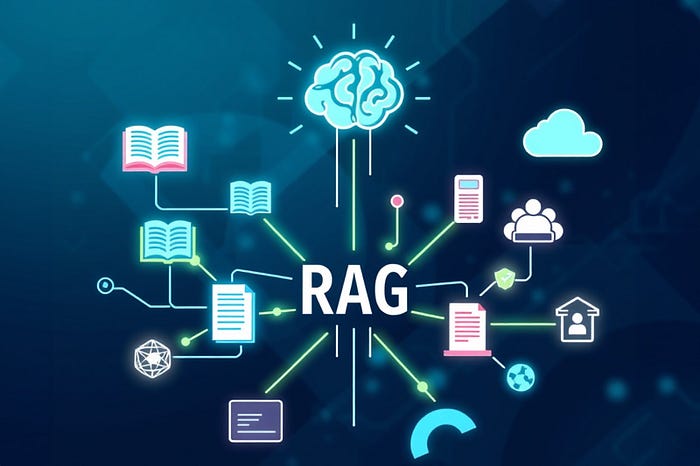
Retrieval-Augmented Generation (RAG) is an AI architecture that enhances the capabilities of generative AI by integrating it with dynamic knowledge sources. Unlike standard AI models that rely solely on pre-trained data, RAG can retrieve real-time information from external databases, documents, or knowledge repositories. This ensures that the responses and content generated by the system are highly relevant, accurate, and tailored to specific contexts.
For instance, in employee training, a RAG system can access up-to-date company guidelines, industry updates, or other relevant resources, ensuring that employees are always learning the most current and applicable information.
The Limitations of Traditional Employee Training
Conventional employee training methods, such as manuals, workshops, or pre-recorded videos, often come with a set of limitations:
Generic Approach: These methods usually deliver the same content to a wide audience, failing to address the unique learning needs of individual employees.
Outdated Information: Static content, like manuals or videos, can quickly become obsolete, leading employees to rely on outdated information.
Low Engagement: Passive, one-way content often struggles to capture employee attention and encourage active engagement.
Lack of Scalability: As organizations grow, maintaining and updating training content across different regions or departments becomes increasingly difficult and inefficient.
In today’s fast-changing environment, these challenges can hinder an organization’s ability to keep its workforce skilled and informed.
How RAG Can Revolutionize Employee Training
RAG offers a solution to these challenges by providing a more dynamic, personalized, and scalable approach to employee training. Here’s how:
1. Personalized Learning Experiences
RAG enables highly personalized training by tailoring content to the specific needs of each employee. By drawing information from internal databases and knowledge sources, the system can provide training that is relevant to an employee’s role, department, or level of expertise.
For example, a new hire might receive training on foundational skills, while an experienced employee could receive content focused on advanced techniques, all from the same RAG system.
2. Real-time Updates and Accuracy
RAG ensures that the content delivered is always up-to-date. If policies change, new compliance rules are introduced, or the industry shifts, RAG can immediately reflect these updates in its training modules, reducing the risk of employees relying on outdated information.
3. Enhanced Engagement with Interactive Content
With RAG, employees can interact with the AI in a more engaging way, asking questions and receiving immediate, detailed answers. This interactive, conversational approach transforms passive learning into active engagement, leading to deeper understanding and knowledge retention.
Additionally, RAG can generate quizzes, case studies, or scenario-based simulations by retrieving real-world examples, making learning more immersive and impactful.
4. Scalability Across the Organization
Whether an organization has hundreds or thousands of employees, RAG systems can scale easily to deliver consistent, personalized training. Large enterprises, especially those operating in multiple regions, can ensure that all employees have access to the same up-to-date training materials, with regional or departmental customizations as needed.
5. Support for Continuous Learning
RAG supports a culture of continuous learning by providing on-demand access to information. Employees can use the system to answer specific questions or receive recommendations for additional training based on their role or performance, fostering continuous professional development.
Steps to Implement RAG for Employee Training
To successfully implement a RAG system for employee training, organizations can follow these key steps:
Identify Relevant Knowledge Sources: Integrate your company’s knowledge repositories, such as policy documents, manuals, and industry databases, into the RAG system to provide a solid foundation of information.
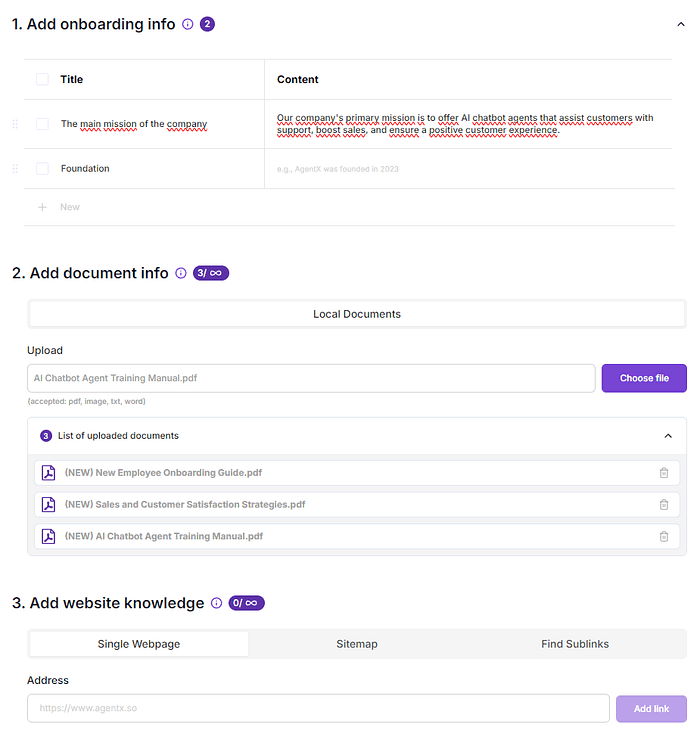
Using AgentX, you can manually input essential knowledge, attach documents, and even scrape a website or an entire sitemap, which will serve as a source of knowledge
Customize the AI for Your Enterprise: Fine-tune the RAG model using company-specific data to ensure the system understands the unique needs of your organization’s language, processes, and goals.
Create User-friendly Interfaces: Develop platforms like chatbots, web portals, or mobile apps that allow employees to easily interact with the RAG system. The simpler the interface, the greater the adoption rate among employees.
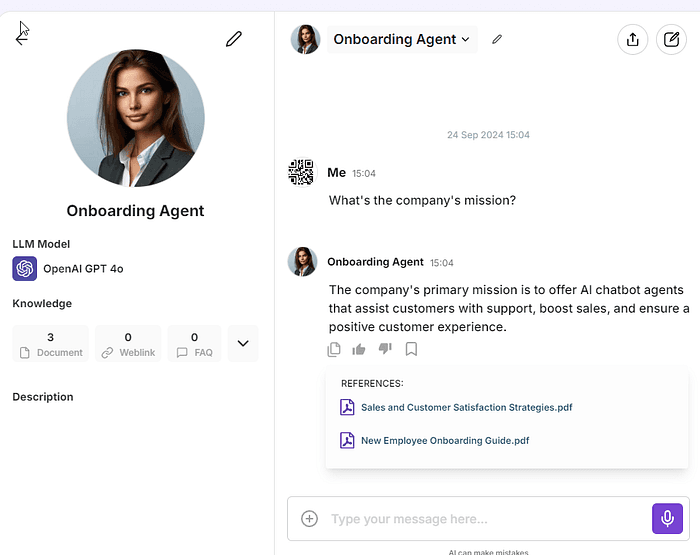
You can conduct the training so that it is delivered by a chatbot directly on the service provider’s website, implement it on your own site, or use an API.
Monitor and Optimize: Regularly monitor employee interactions with the RAG system to ensure it’s delivering value. Use feedback and data analytics to continuously refine and improve the system over time.
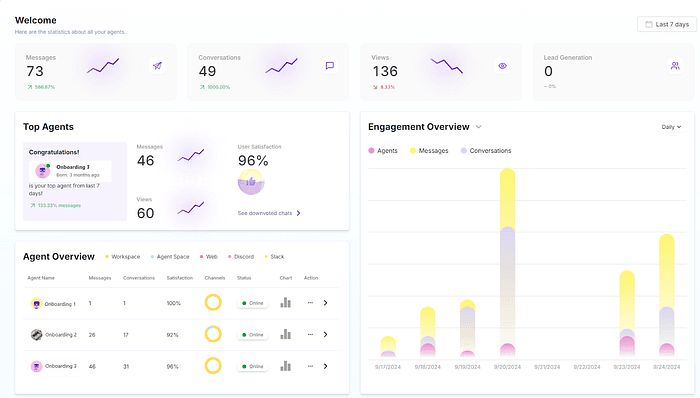
An example of analytical tools offered by AgentX.
Real-World Example: RAG in Action

Consider a multinational company with sales teams across different regions. Each team deals with unique products, customer preferences, and regulatory requirements. In a traditional setup, delivering customized training to each team would be a complex, time-consuming task. However, with a RAG-powered training system, the company can tailor training content for each region.
For example, sales teams in the Asia-Pacific region might receive training on local regulations and customer expectations, while teams in North America could focus on different product lines and market conditions. This level of customization, made possible by RAG, ensures that each team receives the most relevant training, driving better performance and engagement.
Conclusion: RAG is the Future of Employee Training
The introduction of Enterprise RAG marks a new era in how organizations approach employee training. By combining real-time knowledge retrieval with AI-generated content, RAG systems deliver highly personalized, engaging, and scalable training experiences. This not only improves employee performance and satisfaction but also helps organizations stay competitive and agile in a constantly evolving marketplace.
As businesses continue to innovate and grow, adopting technologies like RAG will be crucial in building a workforce that is equipped to meet the challenges of tomorrow. Investing in RAG for employee training is more than just a technological upgrade—it’s a strategic move toward building a more skilled, adaptable, and future-ready workforce. We encourage you to explore the tools and functionalities offered by AgentX.
Share Blog
Related blogs