

AI AGENT TRENDS
Will AI Real Estate Agents Take Over My Job Soon?

The Emergence of AI in Real Estate: How Technology is Redefining the Industry
AI is reshaping the real estate industry by transforming how transactions occur and how agents engage with clients. Tools such as AI chatbots, predictive analytics, and virtual assistants are enhancing efficiency, automating routine tasks, and providing quicker, more accurate property recommendations. With real-time responses and a deeper understanding of market trends, agents can offer more informed insights to clients. AI is not just accelerating transactions but also elevating the overall customer experience, allowing agents to focus on higher-value activities.
Key Players in the AI Real Estate Market
Several companies lead the charge in integrating AI into real estate, revolutionizing how data is utilized and transactions are streamlined:
Zillow: Known for its AI-powered Zestimate tool, Zillow delivers instant property valuations by analyzing historical data and market trends. It also incorporates AI into its iBuying service, enabling faster transactions.
Opendoor: This company uses AI to simplify home buying and selling, offering instant offers based on data analytics, eliminating the need for long negotiations.
Redfin: Redfin employs AI to personalize property searches and improve pricing strategies, using data to deliver more accurate market insights and recommendations.
Compass: By offering AI-powered tools, Compass helps agents with optimal pricing strategies, listing times, and targeted marketing campaigns, increasing property visibility.
Reonomy: In commercial real estate, Reonomy applies AI and big data to provide deep insights into market trends, ownership records, and investment opportunities.
These companies are setting new benchmarks for AI in real estate, redefining how buyers, sellers, and agents complete transactions.
Comparing Traditional Real Estate Agents and AI: A Balanced Perspective
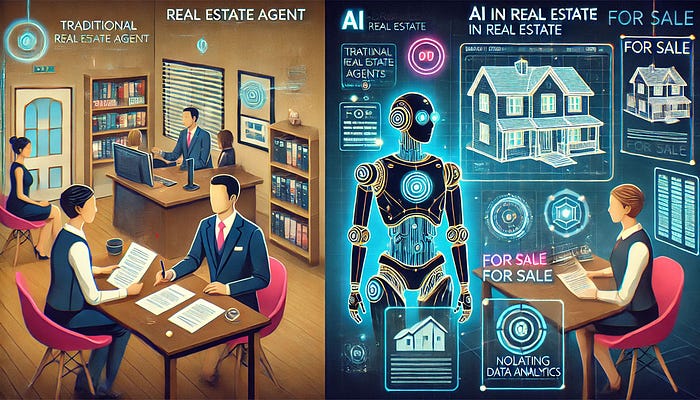
Advantages of Traditional Real Estate Agents
Personal Touch: Human agents excel at fostering trust and rapport, essential when guiding clients through the emotional and often stressful process of buying or selling a home. They offer empathy, understanding clients’ personal needs and desires, which enhances the overall experience in ways that AI cannot replicate. A skilled agent is more than just a transaction facilitator; they are a trusted partner who can tailor advice and support to fit each client's unique situation.
Complex Problem-Solving: Real estate agents are adept at navigating complex, high-stakes negotiations that involve multiple parties and intricate legalities. Their ability to handle unexpected challenges with creativity, quick thinking, and adaptability is crucial. For example, human agents can mediate between buyers and sellers to resolve disputes or unexpected legal issues, ensuring that a deal stays on track. They are also skilled at managing delicate situations with tact, such as when emotional stakes are high for buyers or sellers.
Local Expertise: Experienced agents possess deep knowledge of their local markets, including neighborhoods, schools, property values, and hidden factors that AI may overlook. This boots-on-the-ground experience allows agents to provide insider knowledge that helps clients make more informed decisions, such as understanding neighborhood dynamics, future development plans, or property nuances that only a human expert familiar with the local market can provide. This insight often gives clients a significant advantage in making strategic decisions that go beyond raw data analysis.
In summary, traditional agents offer a blend of emotional intelligence, nuanced problem-solving, and local expertise that remains indispensable in real estate. These human-centric skills ensure that they remain vital to navigating the intricacies of buying or selling properties, even as AI enhances certain aspects of the process.
While traditional agents bring human intuition and experience, AI enhances efficiency and provides data-driven insights.

Advantages of AI in Real Estate
Speed and Efficiency: AI can process vast amounts of data in real-time, allowing for instant responses to client inquiries and rapid analysis of property details, market trends, and more. It automates time-consuming tasks like scheduling appointments, sifting through listings, and performing detailed property evaluations. This efficiency speeds up transactions, enabling agents to handle more clients simultaneously, and helping buyers and sellers to make faster decisions.
Cost Reduction: By automating workflows, AI can drastically reduce operational costs. Tasks that would traditionally require significant time and manpower—such as generating leads, conducting property searches, or evaluating market trends—can now be done automatically with AI systems. This reduces the need for extensive administrative support and cuts down on labor costs. AI can also minimize the need for high agent commissions, offering clients a more cost-effective alternative by streamlining processes.
Data-Driven Insights: AI’s strength lies in its ability to analyze massive datasets and produce highly accurate predictions based on those insights. It evaluates property values, buyer behavior, and market trends with precision, providing agents and clients with actionable, data-backed information. This helps real estate professionals make more informed decisions about pricing strategies, investment opportunities, and market positioning, giving them a competitive advantage. By using AI’s predictive analytics, clients can also anticipate future property values and market shifts, improving their chances of successful investments.
In conclusion, AI’s ability to accelerate processes, cut costs, and deliver data-driven insights positions it as a valuable asset in modern real estate, allowing agents to focus more on personalized services and strategic decision-making.
Challenges for Traditional Agents
Availability: Traditional agents are bound by time constraints, with limited working hours, which can hinder their ability to cater to multiple clients simultaneously. Managing multiple listings, attending viewings, and handling communications with buyers and sellers can be overwhelming, leading to delays in response times and service gaps, especially during peak market periods.
Cost: High commission fees, typically ranging from 3-6% of the property’s sale price, can significantly add to the overall cost of buying or selling real estate. This often becomes a substantial financial burden, particularly in high-value property transactions, making traditional agent services more expensive compared to AI-powered alternatives.
Challenges for AI
Lack of Emotional Intelligence: While AI excels at automating tasks, it lacks the ability to offer empathy or build meaningful client relationships. Human interactions in real estate often involve emotional considerations, such as the stress of finding a home or the emotional attachment to selling one. AI, unable to grasp these subtleties, cannot provide the personal reassurance or understanding that human agents offer during these emotionally charged situations.
Problem-Solving Limitations: AI relies on algorithms and pre-set rules, which limits its ability to address unique, non-standard problems. For instance, legal disputes, unexpected issues with contracts, or emotionally driven conflicts between buyers and sellers require human discretion and judgment. AI struggles with these complex, multi-faceted challenges, often requiring human intervention for resolution.
The Future of Real Estate: A Hybrid Approach?

AI is revolutionizing real estate, but it's unlikely to fully replace human agents. The future lies in a hybrid model, where AI manages routine tasks, data analysis, and automation, while human agents handle personal relationships, negotiations, and solving complex problems. This balance promises a more efficient, client-centered real estate experience.
Job Transformation: New Opportunities and Evolving Roles
AI in real estate doesn’t eliminate jobs; it changes the way professionals work, opening the door for new roles and enhanced responsibilities. Instead of being bogged down by administrative tasks, agents can now focus on value-added activities that require human intelligence, creativity, and emotional understanding—things AI cannot fully replicate.
Relationship-Building: AI can provide data, but it cannot offer the emotional intelligence necessary to build meaningful, long-term client relationships. Clients still prefer working with agents who understand their unique needs and offer a personalized approach. Agents can now devote more time to connecting with clients, learning their preferences, and offering tailored advice that goes beyond what data alone can provide. This human touch fosters trust and loyalty, ensuring that agents remain an integral part of the home buying or selling journey.
Strategic Negotiations: Negotiation in real estate requires creativity, patience, and an understanding of human behavior - all areas where AI is limited. Agents excel at assessing not just market data but also the motivations and emotions of buyers and sellers. They are adept at navigating complex negotiations, finding compromises, and using their experience to secure the best possible deals for their clients. AI can assist by providing data to inform these negotiations, but human agents will always be the key players when it comes to reaching a satisfying agreement.
Problem-Solving: Real estate transactions often come with unexpected challenges, such as legal disputes, financing issues, or emotionally charged situations. These challenges demand quick thinking, empathy, and personalized solutions, all areas where human agents thrive. While AI can help identify potential issues through predictive analytics, it is the agent's experience and problem-solving abilities that ensure smooth transactions. Agents can take these unforeseen circumstances in stride, providing creative, client-centered solutions that foster trust and satisfaction.
Advisory Services: As AI handles much of the data crunching and predictive analytics, agents are increasingly stepping into the role of trusted advisors. By leveraging the insights AI provides, agents can offer more strategic, data-driven advice, guiding clients through complex transactions with confidence. This shift elevates agents from transactional facilitators to strategic partners who help clients navigate the ever-changing real estate market. With AI offering insights into market trends, property values, and buyer behavior, agents can make more informed recommendations, allowing their clients to make smarter, faster decisions.
This transformation offers agents the opportunity to specialize in higher-value activities that require a human touch. Rather than being replaced by AI, agents who adapt to these new tools will be able to deliver enhanced services, strengthen client relationships, and position themselves as indispensable advisors in the real estate process.
AI Augmentation, Not Replacement

AI in real estate is not a threat to jobs, but rather a tool that amplifies human skills. By automating routine tasks like data analysis and administrative work, AI frees agents to focus on client relationships and strategic decision-making. For example, AI can provide agents with real-time market data, making them more efficient and better equipped to offer insights. This allows agents to provide greater value by focusing on higher-level tasks such as negotiations and personalized services.
New Roles and Specializations
As AI technology becomes more embedded in real estate, it is creating opportunities for new job roles and specializations. These roles will require a blend of technological knowledge and industry expertise, opening doors for professionals who can adapt to this tech-driven landscape.
AI Specialists in Real Estate: With AI systems becoming central to real estate operations, there will be a growing need for specialists who understand how to manage and maintain these tools. AI specialists will be responsible for ensuring the smooth operation of AI systems, handling tasks such as data input, troubleshooting, and optimization of AI tools for real estate applications. These roles require a solid understanding of both AI technology and the unique needs of the real estate market.
Data Analysts: AI generates massive amounts of data, and professionals skilled in interpreting and leveraging this data will be in high demand. Data analysts will help real estate companies extract valuable insights from AI tools, such as predicting market trends, evaluating property values, and identifying client preferences. This analysis will empower agents and real estate firms to make more informed decisions, giving them a competitive advantage in a rapidly changing market.
Tech-Savvy Agents: As AI tools become more prevalent, real estate agents who can integrate AI into their daily workflows will have a competitive edge. These tech-savvy agents will use AI-driven tools to enhance customer service, streamline property searches, and optimize marketing strategies. By becoming proficient in AI technology, agents can differentiate themselves in the market and offer clients an elevated level of service. In this new landscape, being tech-savvy is not just an advantage, but a necessity for staying relevant.
These emerging roles highlight the new paths created by AI in real estate, ensuring that professionals who embrace these changes will thrive in a more tech-focused future.
Continuous Learning and Adaptation
As AI evolves, real estate professionals must adopt a mindset of ongoing learning and adaptability. The fast pace of AI advancements means that agents and brokers must remain proactive, continuously updating their skills and understanding of AI tools. Those who embrace this shift will discover that AI is a powerful ally in enhancing their ability to deliver value. Instead of feeling threatened by automation, agents should focus on using AI to optimize their work, making them more effective and indispensable.
Agents who succeed in this new landscape are those who commit to learning how AI can complement their expertise. This involves not only staying updated on the latest technology but also honing soft skills such as emotional intelligence, creativity, and client communication—areas where AI cannot compete. Continuous learning will allow agents to harness AI’s potential for predictive analysis, lead generation, and client relationship management, empowering them to offer more informed advice and better service.
Conclusion: A Symbiosis Between Human Expertise and AI
The future of real estate will be defined not by AI replacing human agents but by the collaboration between human expertise and AI technology. While AI may automate certain administrative tasks, the core of real estate—relationship-building, strategic negotiation, and problem-solving—will always require a human touch. Agents will become more efficient by relying on AI to manage data and routine tasks, allowing them to dedicate more time to offering personalized services.
The successful integration of AI into the real estate industry hinges on agents striking the right balance between technology and their own human strengths. Those who embrace AI as a complementary tool, rather than viewing it as competition, will find themselves at the forefront of an industry that is becoming more customer-focused and data-driven. By leveraging AI’s power while continuing to provide human insight, empathy, and creativity, agents will remain indispensable to the real estate process.
This transformation encourages agents to view AI not as a replacement, but as an enhancement to their capabilities. In doing so, they will be able to offer superior value to their clients, ensuring long-term success in a tech-driven future.
AI Won’t Take Your Job as a Real Estate Agent - It Will Help You Succeed and Work Smarter, Not Harder
AI is transforming the real estate industry, creating both challenges and exciting new opportunities. While automation may streamline some administrative tasks, it doesn’t mean job losses; rather, it allows agents to focus on more valuable aspects of their work. By automating routine tasks, AI enables real estate agents to concentrate on relationship-building, strategic negotiations, and advisory roles, all of which require human intuition and personal connection.
AI improves operational efficiency by offering data-driven insights, accelerating real estate processes, and enhancing the customer experience. Agents can now use AI to analyze large volumes of data in real-time, offering instant responses to client inquiries, property recommendations, and market trends. This allows them to provide a more personalized and informed service, making them indispensable in the process.
In this evolving landscape, the future of real estate will likely be a combination of AI-powered tools and human expertise. Agents who embrace AI as a tool for enhancing their services, rather than seeing it as a competitor, will find themselves better equipped to deliver superior value to clients. They can take advantage of AI's ability to automate time-consuming tasks, leaving more space for strategic decision-making, empathy-driven client interaction, and creative problem-solving.
The key takeaway is that AI won’t replace real estate agents, but it will change the way they work, enabling them to work smarter, not harder. Those who adapt to these new tools will not only succeed but thrive in a tech-enhanced real estate landscape, positioning themselves ahead of the competition.
Explore the Full Potential of AI in Your Real Estate Practice
AI has the power to revolutionize your real estate business, enabling you to streamline operations, build stronger client relationships, and stay competitive. By integrating AI tools, you can automate routine tasks, enhance customer experiences, and generate more qualified leads.
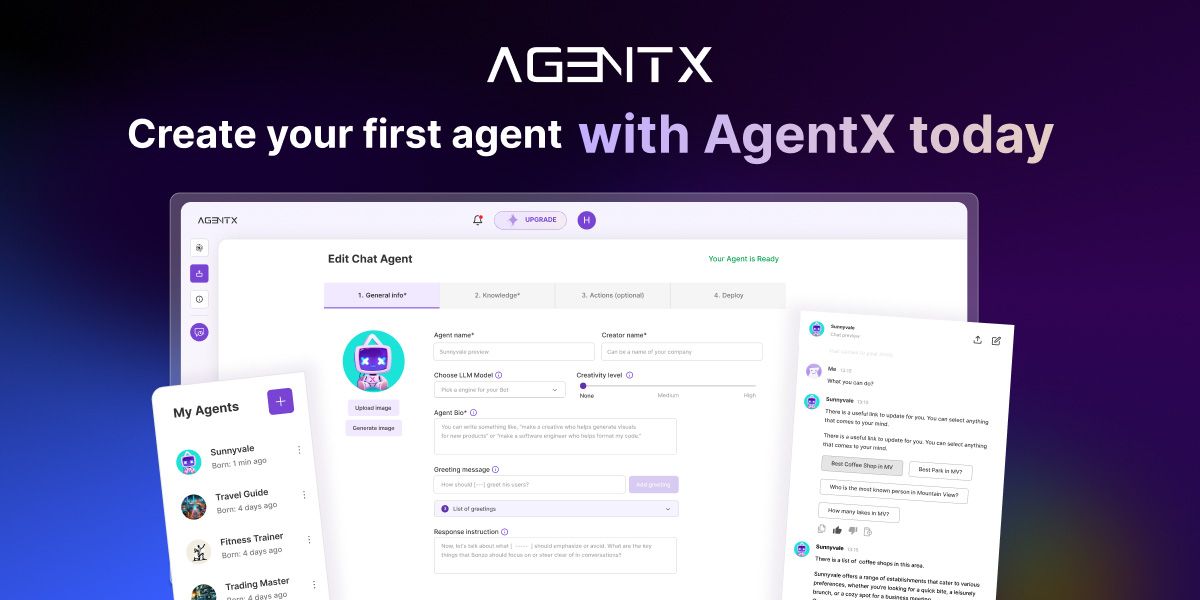
AgentX offers a suite of advanced AI tools that empower agents to improve their services. From lead generation to client management, AI can handle initial phases of communication, qualify leads, and even set up appointments. Visit AgentX today and explore how simple it is to create your own real estate AI specialist. Check out how to set up a lead generation AI agent.
AI will not only support you in managing time-consuming tasks but will also allow you to provide a more personalized experience for your clients. By focusing on higher-level strategies, negotiations, and building lasting relationships, you can maximize your productivity while delivering excellent service. Embrace AI and elevate your business with cutting-edge technology.
Share Blog
Related blogs